Finding the Balance That Drives Sustainable Growth
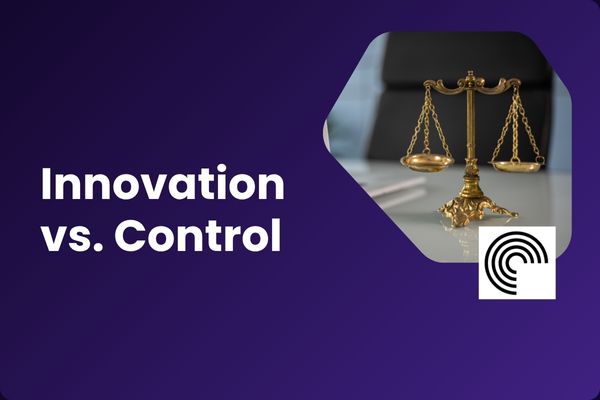
At StrategicAlignment.org, we often tell leaders that every thriving organization runs on a healthy tension between innovation and control.
Innovation drives progress — the creation of new ideas, products, and ways of working. Control provides structure — the systems, processes, and safeguards that keep the business stable.
But when one outweighs the other, organizations lose their balance. Too much innovation leads to chaos. Too much control leads to stagnation.
The challenge for leaders isn’t choosing between innovation or control — it’s designing a system where they coexist productively.
What Innovation Really Means
Innovation is more than creativity. It’s the process of turning new ideas into value — solving problems in ways that improve efficiency, satisfaction, or profitability.
True innovation requires experimentation, calculated risk, and the freedom to fail. It’s fueled by curiosity and adaptability — the qualities that keep organizations competitive in a changing market.
Examples of innovation can be found across industries:
- Apple redefined personal technology by merging design and function.
- Tesla disrupted transportation through bold technological advances.
- Airbnb transformed hospitality without owning a single hotel.
Each of these companies succeeded because leadership embraced risk while staying anchored in a clear strategic vision.
What Control Really Means
Control is the discipline that keeps innovation sustainable. It’s the set of systems, standards, and processes that ensure consistency, compliance, and reliability.
Control provides:
- Clarity — clear roles, responsibilities, and expectations.
- Accountability — metrics and performance tracking that ensure follow-through.
- Risk management — boundaries that protect the organization from legal, financial, and ethical threats.
In highly regulated or safety-critical industries, control is nonnegotiable. But even in creative sectors, control provides the structure necessary to turn ideas into repeatable, profitable outcomes.
Properly designed, control doesn’t suppress innovation — it channels it.
Why Innovation and Control Need Each Other
Innovation without control leads to chaos. Control without innovation leads to decline.
The two forces are interdependent. Innovation sparks growth; control sustains it.
- Innovation pushes the boundaries of what’s possible.
- Control ensures that progress doesn’t derail the business.
- Together, they create productive tension — the space where creativity meets discipline.
When leaders find the right balance, their organizations become both adaptable and dependable — agile enough to evolve, stable enough to scale.
The Risks of Over-Innovation
When organizations pursue innovation at all costs, several issues can emerge:
- Lack of focus. Teams chase too many ideas without clear priorities.
- Wasted resources. Projects multiply without producing measurable value.
- Brand inconsistency. Frequent pivots create confusion for customers and employees.
- Compliance failures. Without proper controls, innovation can create legal or ethical exposure.
Innovation without structure eventually burns through time, money, and trust.
The Risks of Over-Control
Conversely, when organizations rely too heavily on rules and oversight, creativity disappears.
- Employees feel constrained. New ideas are dismissed because they don’t fit the template.
- Decision-making slows down. Bureaucracy replaces agility.
- Risk-taking declines. Teams avoid experimentation for fear of failure.
- Talent leaves. Innovative thinkers move to environments where they can explore ideas freely.
Too much control creates short-term predictability — but long-term irrelevance.
Achieving Balance: The Four Levers of Control Framework
Harvard Business School professor Robert Simons introduced the Four Levers of Control — a framework that helps organizations manage the dynamic between innovation and control.
At StrategicAlignment.org, we use this model to help leaders build systems that empower creativity without losing discipline.
1. Belief Systems
Define and communicate your organization’s purpose, vision, and core values. These beliefs inspire innovation by giving people a reason to create and take smart risks.
2. Boundary Systems
Establish clear rules, ethical guidelines, and risk limits. Boundaries don’t restrict creativity — they create safety zones where innovation can thrive responsibly.
3. Diagnostic Control Systems
Use metrics, KPIs, and scorecards to monitor performance. These systems ensure accountability and provide early warning signs when strategy execution drifts off course.
4. Interactive Control Systems
Create ongoing dialogue between leadership and teams about strategy, risks, and opportunities. Open communication encourages learning, adaptation, and continuous innovation.
Together, these four levers create a governance structure where innovation and control reinforce each other rather than compete.
Lessons from Leading Companies
Google:
Google’s “20% Time” program gives employees freedom to work on projects outside their formal job description — many of which became major products like Gmail and Google News. This autonomy is balanced by structured project evaluation and quality standards.
Toyota:
Toyota’s “Lean” system empowers every employee to improve processes continuously. Workers can halt production to fix problems, ensuring quality control while fostering daily innovation.
Both companies show that structure and creativity are not opposites — they are complementary strengths.
How Leaders Can Create the Right Balance
To maintain equilibrium between innovation and control, leaders should:
- Clarify the purpose of innovation. Connect new ideas to strategic objectives.
- Set guardrails, not roadblocks. Define clear ethical and operational limits.
- Empower decision-making. Push authority closer to where work happens.
- Measure progress. Use data to monitor results without micromanaging.
- Encourage learning. Celebrate smart risks, even when they don’t succeed.
Leadership’s role is not to choose between innovation or control — it’s to manage the relationship between them.
The Payoff: Innovation Within Structure
Organizations that master this balance unlock sustainable growth. They move faster, adapt better, and build trust with customers and employees alike.
The right balance of innovation and control creates:
- A culture of experimentation with accountability
- Faster problem-solving with lower risk
- Measurable performance that supports creativity
- Long-term resilience in a rapidly changing world
At StrategicAlignment.org, we help leaders design these systems — where structure supports creativity and innovation drives disciplined results.
Learn More
If your organization struggles to balance innovation with consistency, visit StrategicAlignment.org to explore frameworks, articles, and tools that help leaders build alignment systems designed for both flexibility and control.
Because the future belongs to organizations that can innovate confidently — without losing control.