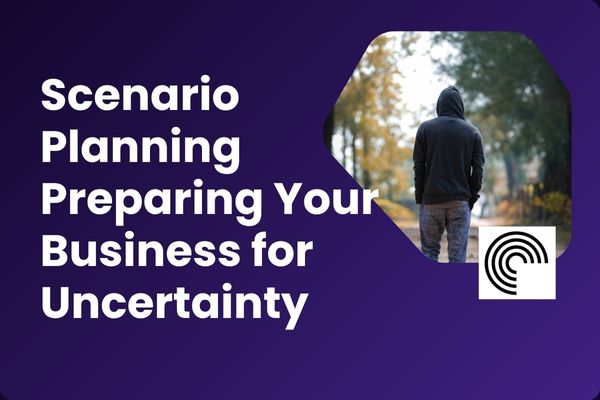
How to Build Strategic Agility When the Future Refuses to Sit Still
At StrategicAlignment.org, we remind leaders of a simple truth:
Strategy is not about predicting the future — it’s about being ready for more than one.
Markets shift. Technologies disrupt. Regulations tighten. Customer behaviors evolve overnight.
In this environment, traditional planning — built on single forecasts and linear assumptions — simply isn’t enough.
That’s where scenario planning comes in.
Scenario planning helps organizations prepare, not just for what’s likely to happen, but for what could happen.
It transforms uncertainty into insight — and insight into strategic readiness.
What Is Scenario Planning?
Scenario planning is a structured process that helps organizations envision multiple plausible futures and test how their strategies would perform in each one.
It’s not about guessing what will happen — it’s about exploring what might happen and how you’d respond.
In other words, it’s not forecasting.
It’s future-proofing.
Scenario planning asks:
- What if the economy slows faster than expected?
- What if a key supplier fails or technology shifts?
- What if customer preferences change dramatically?
- What if regulation reshapes the industry?
By thinking through these “what ifs,” leaders uncover blind spots, stress-test plans, and strengthen organizational resilience.
Why Scenario Planning Matters
1. The Future Is Increasingly Nonlinear
AI, climate risk, global supply disruptions — each creates ripple effects that can change entire industries overnight.
Scenario planning prepares your strategy to flex when the world doesn’t follow your assumptions.
2. It Promotes Strategic Agility
Instead of reacting to crises, scenario-ready organizations pivot quickly.
They’ve already rehearsed responses and can redeploy resources with confidence.
3. It Strengthens Strategic Alignment
Scenarios clarify why certain choices matter — aligning teams around principles, not predictions.
When uncertainty rises, aligned teams can act decisively, because they’ve already agreed on what matters most.
4. It Builds Leadership Confidence
Leaders who plan for uncertainty aren’t paralyzed by it.
Scenario planning reduces anxiety and replaces fear with preparedness.
The Scenario Planning Process: Step-by-Step
Effective scenario planning follows a disciplined framework — combining creative thinking with structured analysis.
Step 1: Define the Focal Question
Start with a clear strategic question:
“What external changes could most affect our ability to achieve our mission over the next 3–5 years?”
Your question becomes the anchor for all scenarios — keeping the exercise focused and actionable.
Step 2: Identify Driving Forces
Brainstorm the external factors that could influence your future, such as:
- Economic trends
- Regulatory or political shifts
- Technological innovation
- Environmental or climate risks
- Consumer and workforce behavior
- Competitive dynamics
Then identify the critical uncertainties — the two or three factors most likely to change your world in unpredictable ways.
Step 3: Create Plausible Scenarios
Use those uncertainties to build three to four alternative futures.
Example:
- Scenario A – The Acceleration: Rapid tech adoption drives new growth.
- Scenario B – The Slowdown: Demand weakens amid inflation and regulation.
- Scenario C – The Disruption: AI transforms customer expectations overnight.
- Scenario D – The Divide: Supply chain fractures and localization dominates.
Each scenario should be:
- Plausible (not fantasy)
- Distinct (not minor variations)
- Relevant (tied to your business reality)
Step 4: Test Your Strategy Against Each Scenario
Now ask the hard questions:
- Would our current strategy succeed in each future?
- Where are we most exposed?
- What strategic options work across multiple futures?
- What early warning signs would tell us which future is unfolding?
This process reveals which parts of your strategy are robust — and which need more flexibility.
Step 5: Identify “No Regret” Moves and Contingencies
From the analysis, classify actions into three categories:
| Type | Description | Example |
|---|---|---|
| No-Regret Moves | Actions that make sense in any future | Invest in digital infrastructure or leadership training |
| Contingent Moves | Actions you take only if certain signals appear | Expand production if demand rises in Scenario A |
| Big Bets | High-risk, high-reward actions tied to one scenario | Enter new market if policy reforms accelerate adoption |
This gives you a portfolio of preparedness — balancing flexibility with focus.
Step 6: Build Early Warning Indicators
Turn your scenarios into a monitoring system.
Identify a few leading indicators that signal which scenario is becoming reality — such as:
- Customer sentiment shifts
- Regulatory proposals
- Technological adoption rates
- Commodity price movements
Use these signals to adjust strategy before change hits full force.
This is where scenario planning feeds directly into your strategic feedback loop — enabling proactive alignment, not reactive survival.
How Scenario Planning Strengthens Strategic Alignment
Scenario planning isn’t just a risk exercise — it’s an alignment exercise.
It forces your organization to:
- Clarify its core mission and priorities (“What doesn’t change no matter what happens?”)
- Build shared understanding across teams about external forces
- Encourage cross-functional dialogue and decision-making
- Establish a common language of uncertainty so teams can act cohesively when conditions shift
When everyone understands how your organization will respond to multiple futures, alignment becomes deeper and more durable.
Example: How Shell Used Scenario Planning to Stay Ahead
Royal Dutch Shell is often cited as the pioneer of modern scenario planning.
In the 1970s, Shell used scenarios to explore the potential for OPEC price shocks — long before they occurred.
When the oil crisis hit, Shell wasn’t surprised; it was prepared.
The company’s culture of scenario-based thinking helped it adapt faster than competitors — preserving profits and market share during one of the most volatile periods in energy history.
That same discipline continues today as Shell plans for decarbonization, digitalization, and shifting global demand.
The takeaway?
Scenario planning builds strategic resilience — the ability to adapt faster than the environment changes.
Bringing Scenario Planning Into Your Organization
- Make it part of your annual strategy cycle.
Treat scenarios as a recurring tool — not a one-time exercise. - Involve diverse perspectives.
Include people from across departments and levels. Fresh perspectives create richer scenarios. - Use visuals.
Scenario maps, timelines, and dashboards help teams see possible futures clearly. - Connect scenarios to decisions.
Each scenario should lead to specific strategic options or actions — not just discussion. - Keep it alive.
Revisit and refresh your scenarios at least once a year. The world changes fast — your planning should too.
Final Thought
Scenario planning isn’t about predicting chaos — it’s about finding clarity within it.
Organizations that master this discipline don’t just survive uncertainty — they use it to sharpen strategy, build confidence, and strengthen alignment.
At StrategicAlignment.org, we help leaders integrate scenario planning into their Balanced Scorecards, Feedback Loops, and Strategic Dashboards — creating organizations that are not only aligned, but adaptive.
Because in uncertain times, alignment isn’t rigidity — it’s readiness.