A Practical Guide to Diagnosing and Strengthening Organizational Alignment
At StrategicAlignment.org, we’ve seen one truth hold across industries: most strategies fail not because they’re bad — but because they’re misaligned.
You can have a bold vision, clear objectives, and talented teams, but if people across the organization aren’t working toward the same priorities, performance will stall.
Strategic alignment is what ensures everyone — from leadership to the front line — understands the company’s direction, their role in achieving it, and how success will be measured.
This checklist will help you evaluate whether your organization is truly aligned or merely busy.
What Strategic Alignment Really Means
Strategic alignment occurs when your vision, strategy, structure, culture, and operations all point in the same direction.
In a fully aligned company:
-
Leadership decisions reinforce the mission.
-
Departments share goals instead of competing for resources.
-
Employees understand how their work contributes to the bigger picture.
-
Metrics measure impact, not just activity.
When alignment is weak, energy fragments — and even strong performers can pull against each other instead of moving together.
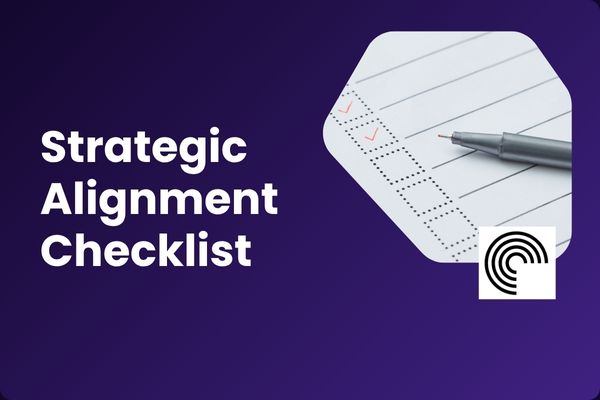
The Strategic Alignment Checklist
Use this self-assessment to see where your organization stands. Answer each section honestly — “yes,” “partly,” or “no.”
Each “no” represents an opportunity to realign and refocus.
1. Vision and Mission
-
Our organization has a clearly defined vision that describes where we’re going.
-
Our mission statement clearly explains why we exist and who we serve.
-
Employees at all levels can articulate the vision and mission in their own words.
-
Leadership decisions consistently align with our stated purpose.
-
The vision inspires action and guides long-term direction.
If your team can’t describe the company’s “why,” alignment can’t take root.
2. Strategic Objectives
-
We have 3–5 clear, measurable strategic objectives that define what success looks like.
-
Objectives are SMART (Specific, Measurable, Achievable, Relevant, Time-bound).
-
Every department’s goals directly support these objectives.
-
Progress toward objectives is reviewed regularly and publicly.
-
Adjustments are made when priorities or market conditions change.
When objectives are scattered or unclear, teams work hard — but not necessarily in the same direction.
3. Leadership and Communication
-
Senior leaders model alignment through consistent decisions and messages.
-
Strategy is communicated frequently, not just during annual meetings.
-
Employees understand how leadership measures success.
-
There are clear feedback channels from teams to leadership.
-
Managers reinforce strategic messages in team meetings and one-on-ones.
Communication is the glue of alignment — without it, even good strategies lose traction.
4. Culture and Engagement
-
Our culture encourages collaboration across departments.
-
Recognition and rewards reinforce strategic priorities.
-
Employees see a direct connection between their contributions and company success.
-
Leaders actively remove barriers to alignment (silos, unclear roles, conflicting incentives).
-
Our values are evident in both decisions and behaviors.
A culture of alignment builds trust — the foundation of sustained execution.
5. Processes and Performance
-
Our KPIs clearly link to strategic objectives.
-
We track both leading indicators (predictive) and lagging indicators (outcomes).
-
Processes and systems support, rather than hinder, cross-functional collaboration.
-
We regularly review and refine our operating model to support strategy.
-
Data and insights are shared transparently across teams.
If processes aren’t designed around strategy, execution becomes guesswork.
6. Accountability and Governance
-
Each strategic objective has a clear owner.
-
Accountability cascades through all levels — everyone knows their role.
-
Decision-making structures support clarity, not complexity.
-
Incentives reward aligned performance, not isolated wins.
-
Leadership regularly reviews alignment health and adjusts accordingly.
Alignment thrives when ownership is clear and governance reinforces purpose.
Scoring Your Results
-
24–30 “Yes” answers:
Your organization is highly aligned. Strategy and execution are working in concert — focus on maintaining momentum and continuous improvement. -
16–23 “Yes” answers:
You’re mostly aligned, but inconsistencies exist. Identify “partial” areas and address communication or accountability gaps. -
10–15 “Yes” answers:
Misalignment is limiting your performance. Review your mission, goals, and measurement systems to restore clarity and focus. -
Below 10 “Yes” answers:
You may have a strategic identity crisis. Alignment must become an immediate leadership priority. Begin by clarifying purpose and redefining shared objectives.
Turning Checklist Insights Into Action
A checklist helps diagnose alignment — but transformation happens when leaders act on what they learn.
Next steps:
-
Share results across your leadership team.
-
Identify 2–3 high-impact areas for improvement.
-
Set measurable actions and timelines to close alignment gaps.
-
Communicate progress and celebrate early wins.
Alignment improves not through massive overhauls, but through consistent, intentional leadership.
Why Alignment Is Leadership’s Ultimate Advantage
When everyone in your company understands the direction, the priorities, and the “why” behind decisions, strategy becomes self-reinforcing.
You no longer need to push — your organization starts to pull itself forward.
At StrategicAlignment.org, we help organizations move from confusion to clarity with tools, frameworks, and assessments that build measurable alignment between vision and execution.
Because in a truly aligned company, strategy doesn’t live in a document — it lives in the culture.
Learn More
Evaluate your own organization’s alignment health with our Strategic Alignment Assessment and explore actionable frameworks at StrategicAlignment.org.
Whether you’re leading a small team or a global enterprise, alignment isn’t just a management exercise — it’s how you get everyone on the same page.